Granny's Country Store > Nature & Wildlife > Awareness Resources | Search | View Cart
Awareness Books, Audio CDs, Resources and Perspective
by Thomas J. Elpel & Jeff Blend
Thanks to everyone who has helped to review and edit this piece!
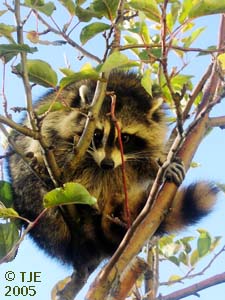
What is the single most important survival skill? Awareness! It doesn't matter whether you are in an emergency survival situation, out for a weekend camping trip, or even in your own home. You might be running a business, tackling a social or environmental problem, or simply investing money in the stock market. In any situation the most important skill is always AWARENESS or consciousness about the potential opportunities and threats around you. Awareness not only alerts you to what is around, but also brings you inward so that deep learning and understanding can take place on a physical, mental and emotional level.
In a winter survival situation, for example, you must be aware of when to start a fire, what to start it with, and where to build it. If you have any doubts about this, just read Jack London's classic story, To Build a Fire. After falling through the ice into frigid water the man in the story is struggling with cold fingers and a falling body temperature to get a fire. After many failed attempts, he finally gets his fire--his last hope for survival-- only to have it extinguished by snow falling from an overhead tree bough. If only that man had looked up!
Now it could be reasonably argued that this is all a matter of semantics--that fire-building is really the most important skill. Awareness about when, what, where and how to build fire are implicit in the skill. The same could be said about life in the city, that there are awareness skills specific to survival in urban environments--things you must be aware of to avoid being mowed down in the middle of the road or mugged in a back alley. In this sense, awareness is not an independent skill, but simply part of every other skill that you learn. Or is it?
If awareness is to be considered a skill in itself, then it must be something you can take from a situation like wilderness survival and apply it to another situation, such as running a business. The purpose of this paper is to make the case that awareness is indeed an independent skill that will aid you in any environment or situation. And yet, awareness itself is implicit in all other skills that we practice, so in a way it is very interdependent with everything we do from building fires to brushing our teeth.
Let me emphasize that awareness is developed through the practice of survival skills and tracking as much as through specific techniques for expanding your capabilities of observation. The expanded capability for awareness that you gain through these pursuits will aid you in everything that you do, even in the modern world. If you can bring the observations learned from tracking, for example, to a simple and mundane activity like signing your name on a check, you may learn a lot of very important things about your general state of being when writing the check (e.g. your relationship with money, whether or not you are impatient in everyday life, etc).
In this discussion I include my own experiences in developing the skills of awareness, as well as the books, CDs and other resources I have found helpful in that pursuit.
Tom Brown Jr. Autobiographies and Field Guides
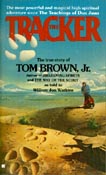
As a teenager I virtually lived in Tom Brown's books. I bought each one as soon as it was published. I practiced wide-angle or peripheral vision and "fox walking" continuously. I practiced these skills in school, noticing life outside the windows while listening to lectures in class. In gym class when we were jumping hurdles, I was proud to over hear one girl say to another, "He runs like a deer!" After school I walked to a nearby wooded thicket to follow tracks and observe nature. I built my own camp there with a half-insulated debris hut and a campfire.
I taught myself to break the spell of the television, to be aware when people came into or left the room during a show. I learned to follow the landscape with my peripheral vision while reading in the car, so I always knew where we were and what was going on outside. I always knew where everyone was in the house, even while deep in a book. I kept a sandbox in my bedroom for studying tracks.
My grandma was the main influence that triggered my interest in primitive wilderness survival, but it was Tom Brown's books that fired my imagination for the possibilities. In the stories Brown describes the way he learned about primitive survival and tracking with his friend Rick under the tutelage of Rick's grandfather Stalking Wolf. As a reader you are easily caught up in the stories, desperate to learn what Tom and Rick did. Through these books Tom Brown has single-handedly inspired tens of thousands of otherwise rational adults and urbanized kids to let out their inner child and go play in the woods.
 Tom Brown's stories about survival, tracking, and greater awareness are so fantastic--especially to those who are searching for deeper meaning in life--that it is easy to elevate him to a god-like status. It is just like Beatlemania, N-SYNC, or any other idolized public symbol, where it seems your life will somehow be improved if you can just be near such a great person. I've been there, and I've seen hundreds of other people doing the same thing, espousing the gospel of Tom Brown--talking incessantly about him, what he has done, and what he teaches and preaches.
There is a saying that in the path of knowledge and wisdom you have to "kill the Buddha". That is, you have to knock your idols and mentors down from the pedestals you placed them on, in order to learn what they are really teaching. It was a shock and a heart-break for me the first time I heard anyone say something bad about Tom Brown Jr., but it also helped jar me back into reality and increased my internal awareness. I write that here, because you cannot learn the awareness techniques that Brown teaches until you break through that spell over his apparent greatness.
 I have had the opportunity to experience idol-worshipping from the other end too, when one of my readers was literally hypnotized by my presence. It was a strange experience to be followed around all day long by someone who just wanted to be close to me, as if something good would rub off. (Fortunately this is a rare occurrence!) This individual would have followed me into the bathroom if I had let him. Having experienced idol-worshipping from both ends, I've since revised my writing and teaching practices in an effort to temper people's expectations before they meet me.
It is interesting to notice how words on a piece of paper elevate one so quickly to the status of "authority", whether that status is warranted or not. For example, many primitive skills articles--including some of mine--were written by individuals who only tried a particular skill once, then wrote about the experience. I'm not saying that is a bad thing to do. Organizing your thoughts on paper is a great way to learn and solidify your experiences into real knowledge. The problem is that the writer is elevated to a status where it seems they must have done the skill for years, even when they didn't. I write this here to help you become more "aware" as a reader.
 Writing is often embellished too, either directly or by recombining separate events to make a composite story. The most simple embellishment is an "embellishment by omission", which is to focus on one's successes and high points while omitting one's short-comings. A person who is good at something only fifty percent of the time can use that material for one-hundred percent of a story, thus creating an image that is much better--essentially flawless--compared to the their actual skill level.
When I realized I was setting myself up for a fall, projecting an image that is much better than my skill level, then I altered my writing to include my short-comings (especially evident in my on-line camping journals). I do not want anyone to come to me expecting to get something I do not have and cannot give.
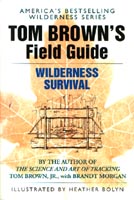
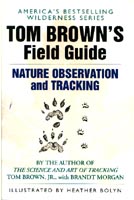
For those who are interested in wilderness survival and nature awareness skills, I highly recommend Tom Brown's books to fire the imagination. From his books you can discover the possibilities, just be "aware" of the pitfalls of placing him on a pedestal. My favorite titles from his autobiographies and field guides are available here. Please scroll down to the end of the page for an on-line order form.
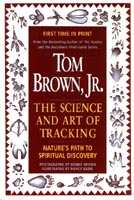
-Please scroll down the page for an online order form.-
Nature Awareness and how it Relates to Everyday Life
The primitive skills taught at wilderness schools nationwide are those that were used by native populations (including Native Americans, African Bushmen and Australian Aboriginals) to survive in their natural surroundings. In December 1999 I gave a presentation on these skills that piqued the interest of Jeff Blend from Helena, Montana.
Jeff has long been interested in awareness of his internal self and his surroundings. He practices the arts of yoga and meditation. Since he started practicing primitive skills, he has told me several times that these skills are most valuable to him for the awareness they give him, as opposed to the actual skills involved. Projects like making cordage or starting a fire-by-friction become the means for Jeff to plug into his deeper self and to learn about his surroundings. Through awareness--being in tune with the moment--the skills come alive with exciting possibilities and reinforce his connection with Earth. Without that awareness, the skills are usually "just another chore, like doing the laundry", says Jeff:
"I practice primitive outdoor skills for the awareness they bring me. Primitive skills embody aspects of two very important things in my life: nature's wild energy and yoga's centering power. Really, these two things are one in the same because Yoga is simply the act of being present and accepting of everything that happens to you. That is exactly what nature is all about.
"On primitive expeditions participants must often deal with hunger, cold, sogginess and general discomfort because they intentionally do not bring along conveniences such as tents and cook stoves. While attempting to eat, stay warm, sleep and stay hydrated outdoors-- with little or no modern camping equipment-- they must tune into the present to deal with the situation. They must adapt to the harshness and uncertainty of meeting the body's basic needs in nature. If the weather becomes nasty, for example, then they must react and perhaps find shelter or at least stay warm. This requires courage, flexibility and the ability to stay calm in the midst of a tough situation.
"Once a person breaks down their comfort zone and releases dependence from their material things and normal routine, something happens on the inside. The 'primitive participant' begins to let actions flow based upon intuition and instinct. They lose that nagging sense of clock time and social obligation. In fact, they may lose the sense that they are an individual 'I' or 'me' at all! Instead, they become very connected to their landscape in a way that breaks down the barriers that separate the 'I' from everything else. This is a sign that one is naturally moving into a meditative state and truly living in the present.
Sitting on a meditation mat with incense burning is not needed for one to become "enlightened" or present, because one is already meditating on the primitive task at hand. It is much easier to stay in the present moment when concentrating on an essential task such as starting a fire for warmth than when making more mundane decisions such as what to watch on TV. This is why so many seek out the challenges of the outdoors or the challenges inherent in starting a business or extreme skiing.
"Because of its raw nature, primitive living demands flexibility and the ability to remain calm in any situation--even while you push beyond percieved limits. Interestingly, these are the same ideals encouraged by ancient Yogis and martial artists in the Far-East. When one needs to do something to survive and has only the materials around them, it is amazing how much ability we all have to improvise and really use our heads. It is no wonder that so many outdoor skills schools are being set up as alternative therapies for troubled children and teens who need to look inward to deal with deeper issues.
"Primitive expeditions wake up dulled senses and snap us out of our petty dramas into the present reality of nature. The garbage of mind and body is shed because there is really no margin for it out in the bush. I am not thinking about politics or the stock market when I am very hungry and am trying to make a meal that may or may not succeed. In yoga, we use the difficulty of a headstand or of sustained compassion to continually keep the spirit awake and aware. With primitive skills, it is the challenge of surviving and the direct participation with the planet that cultivates that same awareness.
"I took my first outdoor expedition with Tom Elpel in the middle of a Montana winter and got a 'trial by fire' of how hard it is to live off the land. I was miserable for the first two days due to cold, hunger and the disruption in my schedule. With only a blanket for bedding and about one cup of simple food per day, my feet were always cold and my stomach perpetually empty. I swore I would never participate again in such a venture and almost left the group to hitchhike home. On day three, I couldn't get a fire started with my bowdrill set and finally walked off alone and after some meditation, cried for an undetermined amount of time. Once I let my emotional defenses down and detached from my ego, I felt great and then started a fire very quickly. The next four days were incredible as we walked across the landscape building shelters and learning about plants. I had released a lot of 'garbage' in the crying session and felt better than I had in a long time physically, emotionally and spiritually. By the last couple of days, time took on a new meaning and I pretty much lived every moment of those days in the present. I was so full of joy and wonder that I even found humor in our snowball fashioned toilet paper!"
Does Nature Awareness Help the World?
One of the central themes of Tom Brown Jr.'s work is awareness of "the whole", to take the details of individual tracks or events and connect them to the larger story. For example you would look at the tracks and behaviors of mice and pick up clues from that about what the owls are doing. He doesn't provide many specifics on the topic, except that it requires lots and lots of "dirt time" to learn it.
A question that bothered me while growing up was whether or not that kind of intimate knowledge about the interactions of owls and mice or anything else was really relevant to the larger world picture. For example, a really good tracker may be able to track mice or rabbits across western rangelands, studying the soil every step of the way, but would they notice that the bare ground between the plants is increasing from year to year?
Range ecologists never made that connection, because traditional management tools evaluated the health of the grass itself, rather than the soil. By itself the grass could score a high rating, even though there was less of it each year. As it turns out, Allan Savory, the individual who identified the critical role that hooved animals play in maintaining arid rangelands, made the discovery while man-tracking during the civil war of Zimbabwe in the 1960's. Tracking forced him to look at minute details on the ground. His job led him through wild lands, pasture lands, crop lands, and rested lands all across the country, often through several regions in a single day. He noted that the healthiest lands were those that were beaten by the hooves from massive herds of animals, while the worst lands had few or no animals on them. (For more details on range ecology and desertification, be sure to read my article The American Sahara: The New Desert Beneath Our Feet.) Although Allan Savory was able to make the connection thanks to his tracking work, I've seen no evidence that any other trackers have been able to make the same leap.
So it seems that while tracking and nature awareness skills can create the opportunity to see the larger picture of ecology, there is no guarantee that a person will actually make that leap. Nevertheless, I think that these skills at least facilitate the opportunity to tune into the observations of others who have made those connections. And just as importantly, nature awareness skills can help us to spend more of our time in all situations really observing what is out there and not falling prey to media, programming or general lethargy.
For example, learning to start fires with a bowdrill set is a skill that requires and develops your awareness, because you need to be aware of what types of woods are best to work with and where to get them. But even if you worked with a resource like cottonwood for years and years, you might not ever notice that along many rivers there are only mature trees and no young ones.
The problem is that cottonwoods require flooding to establish seedlings, so the river downstream from a dam often has no new trees. It is a simple observation, but most people would miss it, even after spending years around cottonwoods. We tend to accept our world as it is, without questioning the basics. The difference is that if you are practicing primitive skills and nature awareness then you are far more likely to tune into a news report about cottonwood ecology. Thus you may not develop the awareness skills to pick up on cottonwood ecology by yourself, but you will be alert to it if someone else makes the discovery. That alone is very valuable, and can be used to monitor your own actions at work, at home and with others.
For example, you might look into how to live sustainably at home and ultimately save money and resources. Without this awareness, you might not think twice about how you live. You might just pay your high energy bills and take out your five bags of trash every week, as if that were perfectly normal!
Through the awareness and attention inherent in the primitive experience comes a respect for the Earth that words cannot express. Living off the land, one sees how they affect the environment with every act of consumption and respect is generated. In modern society, most living necessities are conveniently provided by others. Farmers grow our food, carpenters build our houses, utilities provide our power and laborers make our clothes. Fossil fuels--energy borrowed from the past--run a majority of our culture and make most of us materially wealthier as a society than ever before. As a result, most of us have few skills that provide our basic needs. Instead, we know the living skills for modern survival such as driving, good writing, check book balancing, computer literacy and information processing. While these are extremely important, they tend to keep us apart from the planet and its subtle energies. Comfort becomes our master if not occasionally broken.
Our necessities are easy to come by because we have the technology to easily obtain them. Stoves and lighters ignite with a touch of the hand, food is always available at the store and gasoline is cheaply available. Therefore, most of us take these things for granted and think we should have them immediately and cheaply. Some of us tend to lose our humility and respect for the Earth as a result. Taking four hours to start a fire, on the other hand, gives one the humble feeling of what it really takes to biologically sustain us.
The awareness that you gain in the outdoors is easily transferred back to life in the modern world. You will notice the resources we consume and the foolish ways that we waste them, such as building new houses with most of the windows facing north. Even the most lowly reptiles know enough to take advantage of solar gain on a cold day, yet so many people fail to recognize the obvious and spend thousands of dollars consuming fuel to heat a house that would have mostly heated itself, if only it were turned around!
Through primitive skills and nature awareness you will realize that we live in a world of great abundance. Our environmental problems are not due to a shortage of resources, but to a shortage of awareness about how we use those resources.
Conclusion
Awareness is the simple but profound act of being conscious of the world around you. It is a matter of knowing where the electricity comes from when you flip on the light switch, what the dog is barking at out in the yard, and where the food on the table came from and how it was grown. Awareness is also about making a connection with the plants and birds and insects and wildlife and geology every place you go. To me it is like living in a world full of friends, and in my daily walks or distant travels I recognize old friends and flowers, some of which I haven't seen in years.
The more you practice awareness skills, the more neural connections you will make, expanding your view of the world and your ability to interpret and evaluate it. Any observation that cannot be understood suddenly requires your personal investigation. You may find yourself plagued with questions, causing you to screech to a stop beside the road, desperate to know what that flower was, or possessed by the need to study the ecology of a particular field or forest.
Instead of switching on the television news and accepting every story as absolute truth from an authority figure, you will recognize certain inconsistencies--that so many stories are based on flawed assumptions. When the news describes desertification from over grazing you will recognize it as desertification from too few animals on the land. When the news describes an energy shortage you will see such a surplus of wasted energy, that the same supply could profitably meet the needs of twice as many people. When the news describes a horrible crime, you may no longer see the criminal as the cause of the problem, but as the symptom of something more basic about our society and our relationships with each other and the world around us.
Surprisingly, awareness will teach you about yourself more than anything else. You will observe your own patterns of behavior and begin to question those that are less than positive. When someone says that you are being completely unreasonable, you might just stop and realize that they are correct, because you noticed it too. You will begin to discover a new you, and find much more satisfaction in the life you live.
Order Form
Also be sure to see these related pages:
An Interview with Tom Brown, Jr. & Larry Dean Olsen